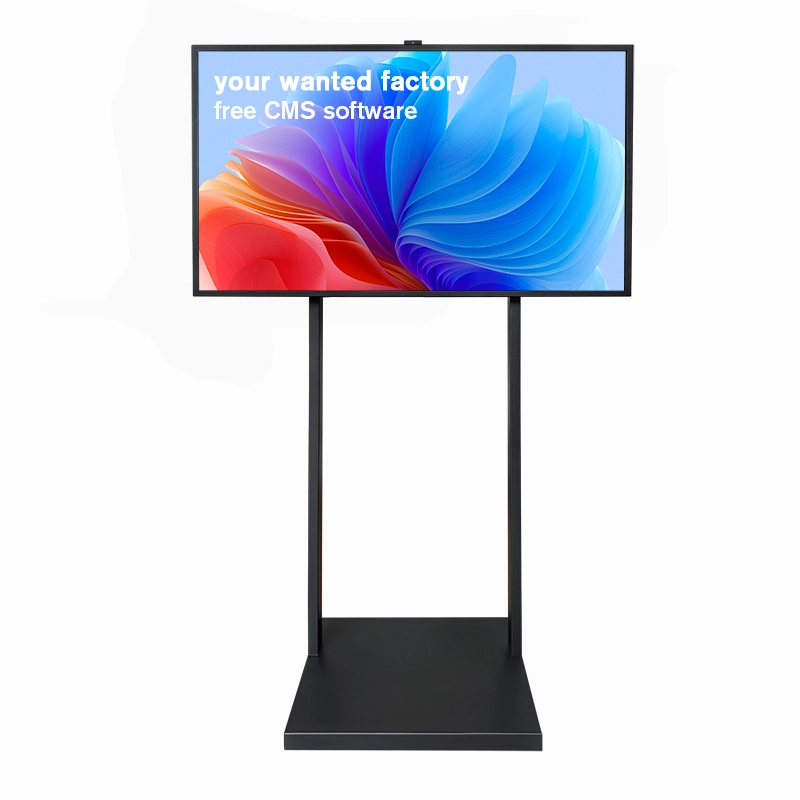
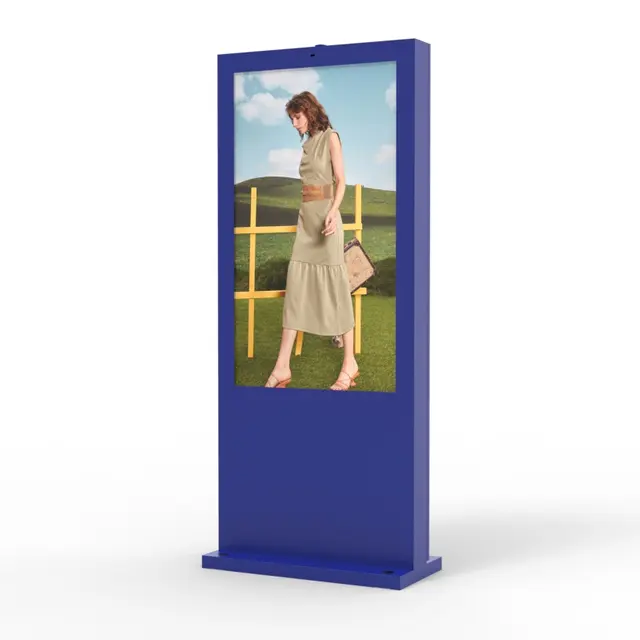
Floor standing transparent oled displays represent modern self-emissive digital signage hardware. These advanced screens blend crystal-clear glass elegance with vivid dynamic graphics. In 2026, organizations rapidly adopt this technology across luxury retail spaces, corporate lobbies, and public exhibits. The self-emitting pixels preserve ambient room light while producing floating 3D visual effects.
Feature | Transparent OLED Signage | Traditional Commercial LCD |
Visual Transparency | Offers see-through graphics floating over backgrounds | Uses opaque screens creating solid visual barriers |
Display Mechanism | Self-emissive pixels eliminate heavy backlights | Requires solid backlight assemblies |
Design & Integration | Slim profile preserves open spatial design | Bulkier profile feels heavy in modern spaces |
Primary Value | Blends digital content with physical architecture | Serves basic content playback |
Business decision-makers and AV integrators evaluate these unique hardware capabilities to transform physical customer environments in 2026.
Key Takeaways
Transparent OLED displays show floating digital graphics on see-through glass without using bulky backlights.
Self-emissive screen technology cuts energy use by 70 percent compared to older transparent LCD panels.
Stores, corporate lobbies, and museums use these clear displays to engage visitors with interactive content.
The global transparent OLED market will reach over five billion dollars by 2026 due to lower costs.
Future displays will feature bendable glass and higher brightness to transform modern building architecture.
Floor Standing Transparent OLED Technology

Modern floor standing transparent oled hardware changes how businesses present visual digital media. Unlike legacy displays, these systems eliminate traditional thick backlight units. Manufacturers create paper-thin displays by depositing organic compounds directly onto clear glass substrate panels.
Self-Emissive Display Mechanics
The core architecture relies on an active-matrix OLED (AM-OLED) structure. Electric current directly stimulates organic light-emitting layers inside the panel. This electroluminescence process generates vibrant visuals at the individual pixel level:
Electric current flows from the positive anode into the organic emissive layer.
The negative cathode simultaneously injects electrons into the panel substrate.
Charge carriers meet and recombine inside the organic compound matrix.
The immediate energy release generates crisp visible light directly at each pixel location.
Because every pixel produces independent illumination, individual subpixels turn off completely to achieve true pitch-black states. This self-emissive mechanism yields impressive contrast ratios up to 100,000:1 while maintaining an ultra-thin 2mm panel profile.
Technical Insight: Removing the bulky backlight module eliminates internal light scattering. The ultra-thin construction allows structural glass designs to maintain high optical clarity while showing sharp floating 4K UHD graphics.
Leading hardware manufacturers push panel engineering boundaries to meet enterprise demands. LG Display manufactures commercial panels ranging from 30 inches to 77 inches. Similarly, Shenzhen Dinosaur Display Co., Ltd. delivers its versatile Advertising Display OLED Transparent Glass Display Screen line in expansive sizes from 32 inches up to 86 inches.
Specification Category | Technical Detail |
Panel Types | Self-Luminous Active-Matrix OLED |
Screen Size Spectrum | 30-inch up to 86-inch custom options |
Panel Thickness | Down to 2 mm ultra-thin profile |
Refresh Speed | 120 Hz smooth action playback |
Response Speed | Fast 8 ms response rate |
Viewing Angles | Wide 178° horizontal and vertical range |
Contrast Ratio | Up to 100,000:1 dynamic contrast |
Transparency and Contrast Rates
Commercial transparent screens balance digital visual brightness with physical optical clarity. Standard panel configurations achieve consistent light transmission rates between 30% and 50%. A typical 55-inch glass unit delivers a 45% physical light transmissivity baseline under ambient room lighting.
Engineers protect delicate display layers using scratch-resistant, UV-coated tempered glass. This hard coating finish preserves screen clarity inside busy commercial environments. Specialized motorized mechanisms also enhance visual versatility. Displays can switch into specialized black background modes. These features convert screen areas from completely transparent to opaque states, optimizing real-time image contrast for dark content.
Hardware Enclosures and OS Integration
Engineers design versatile physical housing assemblies around the glass panels to create a floor standing transparent oled unit. Sleek metal frames host internal power converters and control electronics. The core system architecture combines several essential hardware components:
Control Driver Board: Processes high-definition video feeds through standard hardware input ports.
Integrated Media Player: Supports remote content updates and local media scheduling.
Structural Enclosure: Securely supports floor-standing, frameless, or custom architectural installations.
Optional Sensor Modules: Adds responsive PCAP touch layers, camera systems, and proximity sensors.
Modern displays offer powerful dual OS support. Integrated media players run operating systems including Android, Microsoft Windows, and Linux. Built-in Wi-Fi connectivity streamlines cloud management through modern Content Management Systems (CMS).
Energy efficiency represents another major operational advantage. Self-emissive pixel management consumes power only where active visuals appear. These advanced glass displays use up to 70% less energy than old legacy transparent LCD panels, reducing long-term enterprise operating costs.
Primary Commercial Applications in 2026

Commercial adoption of clear digital glass accelerates rapidly across modern urban spaces in 2026. Businesses blend digital visual media seamlessly into physical environments to boost visitor engagement.
Deploying Floor Standing Transparent OLED Displays in Retail
Luxury retail stores transform window displays and product showcases with clear digital screens. High-end boutiques position merchandise directly behind transparent glass panels. Vibrant digital animations float over physical luxury goods like watches, perfume bottles, and designer handbags. Shoppers inspect real product textures while viewing floating price tags, color options, and promotional campaign videos.
Corporate Lobbies and Experience Centers
Modern enterprise receptions deploy floor standing transparent oled screens to create memorable brand experiences. These interactive units welcome global clients and present dynamic corporate achievements.
The visual hardware offers several interactive capabilities for corporate visitors:
Multi-Touch Support: Integrated Projected Capacitive (PCAP) touch technology registers up to 10 simultaneous touch points for smooth user interaction.
Sensor Integration: Built-in motion sensors detect approaching guests and automatically trigger dynamic welcome messages.
Mobile Engagement: Quick QR code overlays allow guests to scan the screen and transfer digital presentation files directly to smartphones.
Smart Navigation: Interactive information kiosks provide real-time wayfinding directions across multi-story enterprise facilities.
Museums and Interactive Exhibits
Museum curators overlay digital graphics directly onto historical artifacts inside clear glass display cases. Visitors view ancient relics through clear panels while illuminated historical facts and 3D reconstruction models animate across the glass surface. This layout preserves ambient light and protects delicate artifacts.
Transit Hubs and Public Spaces
International airports and train terminals install transparent display stands across main concourses. Busy travel hubs broadcast real-time flight schedules, weather updates, and directional maps without blocking physical architecture or traveler sightlines.
2026 Market Status and Industry Growth
Commercial enterprise demand transforms clear digital signage into a standard installation strategy. Industry analysts report surging adoption rates across global enterprise sectors in 2026. High production standards now drive faster commercial deployments worldwide.
Market Size and Economic Valuation
The market for transparent emissive displays expands at a rapid pace. Financial analysts place the global transparent OLED market valuation between $5.28 billion and $6.00 billion in 2026. Strong enterprise interest drives continuous investment across North America, Europe, and Asia-Pacific.
According to market industry reports, the global market for transparent OLED displays will expand significantly to reach an estimated valuation of $25.7 billion by the year 2033. This growth trajectory represents a compound annual growth rate (CAGR) of 12.40% over the forecast period spanning from 2024 to 2033. Alternative market projections predict peak sector CAGR figures exceeding 30% in specific luxury retail segments through 2033.
Financial Indicator: The market expands rapidly due to hardware stability, lower component costs, and rising integration demand in flagship commercial properties.
Financial Metric | Market Benchmark |
2026 Global Valuation | $5.28 Billion – $6.00 Billion |
2033 Projected Valuation | $25.7 Billion |
Forecast Period CAGR (2024–2033) | 12.40% |
Primary Growth Regions | Asia-Pacific, North America, Europe |
Manufacturing Yields and Cost Trends
Glass fabrication facilities show massive technical progress in 2026. Factory engineers resolved early glass substrate bonding challenges. Improved yield rates directly reduce manufacturing overhead for large panel sizes.
Key production improvements deliver distinct commercial benefits:
Higher Substrate Yields: Better factory cleanroom processes increase usable glass yields above 85%.
Standardized Panel Cuts: Scaled manufacturing lowers unit production costs for standard 55-inch and 65-inch units.
Integrated Electronics: Compact controller housing designs reduce material sourcing expenses.
These manufacturing efficiency gains make hardware deployments far more accessible. Businesses buy commercial display stands with faster investment recovery cycles. Lower entry costs allow regional retail chains to deploy dynamic transparent hardware across multiple storefront locations.

Industry Adoption Drivers
Major international trade exhibitions accelerate enterprise purchasing decisions. Global showcases give business executives hands-on experience with advanced digital glass systems.
Enterprises upgrade legacy displays to modern visual hardware. Deploying a floor standing transparent oled unit elevates customer interest instantly. Dynamic visuals overlay physical products to boost buyer engagement. Companies select self-emissive glass displays to stand out in crowded commercial markets.
Future Outlook Beyond 2026
Display engineering advances rapidly past 2026. Display makers continue refining raw organic panel components to break physical performance barriers. Future commercial spaces will feature completely integrated digital surfaces.
Next-Generation Panel Innovations
Engineers develop new organic compounds to boost screen performance. Future panels will deliver higher transparency levels exceeding 60% while increasing peak brightness outputs. Advanced micro-pixel structures will reduce power consumption even further.
Key technical innovations will transform next-generation display hardware:
Flexible substrate layers: Manufacturers develop bendable clear glass formulations for curved architectural displays.
Higher energy efficiency: New blue-emitting phosphorescent OLED materials will slash active screen energy draw.
Integrated touch matrices: In-cell touch sensors will eliminate extra glass layers to create thinner display designs.
Future Trend: Next-generation display glass will combine ultra-high brightness with true 60% optical transparency, driving outdoor daylight usability across commercial spaces.
Long-Term Architectural Integration
Clear display hardware transforms structural architecture. Architects move beyond standard digital screens to treat transparent digital glass as active building materials. Modern interior designers integrate these screens directly into permanent room divider walls, luxury retail shopfronts, and interactive conference room windows.
Enterprises will deploy floor standing transparent oled units as flexible, modular space partitioners. These self-contained digital structures will allow facility managers to reconfigure room layouts quickly. Future smart buildings will combine ambient lighting, transparent screens, and room sensors into unified automation networks. These automated glass systems will regulate solar heat gain during daytime hours while displaying vibrant dynamic visual brand content to passing visitors.
In 2026, floor standing transparent oled displays prove their commercial viability across global markets. These advanced glass screens seamlessly bridge physical spaces with dynamic digital content.
Organizations achieve several strategic advantages:
Decision-makers should upgrade legacy signage today to transform customer experiences and secure a competitive market position.
FAQ
What is the main advantage of a transparent OLED over a traditional LCD?
Floor-standing transparent OLED displays feature self-emissive pixels that eliminate traditional backlights. This hardware design creates vibrant floating graphics while preserving ambient room light and background visibility. Furthermore, self-luminous OLED screens consume up to 70% less energy than legacy transparent LCD panels.
What screen sizes and operating systems do these displays support?
Hardware Versatility: Top manufacturers provide screen sizes ranging from 32 inches to 86 inches.
These commercial units feature dual OS integration, supporting both Android and Microsoft Windows platforms. System operators update media files remotely through cloud content management software over built-in Wi-Fi networks.
How clear is the glass on a commercial transparent OLED screen?
Commercial transparent OLED panels deliver consistent light transmission rates between 30% and 50%. Scratch-resistant, UV-coated tempered glass protects delicate internal display layers. This crystal-clear construction lets physical objects behind the panel show through while vivid 4K UHD animations float over the background surface.
Where do organizations deploy floor-standing transparent displays?
Enterprises place transparent OLED kiosks across diverse commercial spaces:
Luxury Retail Stores: Floating graphics highlight physical merchandise.
Corporate Lobbies: Interactive screens welcome high-profile guests.
Museum Exhibits: Digital text overlays historical artifacts.
Transit Hubs: Clear screens display schedules without blocking architectural views.